
Engineering Safety-Critical Systems
From system architecture to verification, certification, and lifecycle support
Safety-critical systems operate in environments where a failure can have serious consequences for people, infrastructure, equipment, or mission operations. Reliability therefore has to be considered from the beginning of development, with safety requirements influencing system architecture, hardware, firmware, software, integration, verification, and documentation.
Powersoft19 develops and integrates safety-critical embedded systems for demanding applications, bringing together systems engineering, embedded development, hardware engineering, software engineering, quality assurance, and verification capabilities. Our approach connects safety objectives with practical engineering decisions, helping teams identify risks early, maintain traceability throughout development, and build systems that can be thoroughly verified against their intended requirements.
From a new product requiring a safety architecture to an existing system undergoing redesign or modernization, our teams can support defined engineering activities or contribute across the broader development lifecycle. If you are planning a safety-critical product or addressing challenges in an existing system, talk to our experts about your requirements.
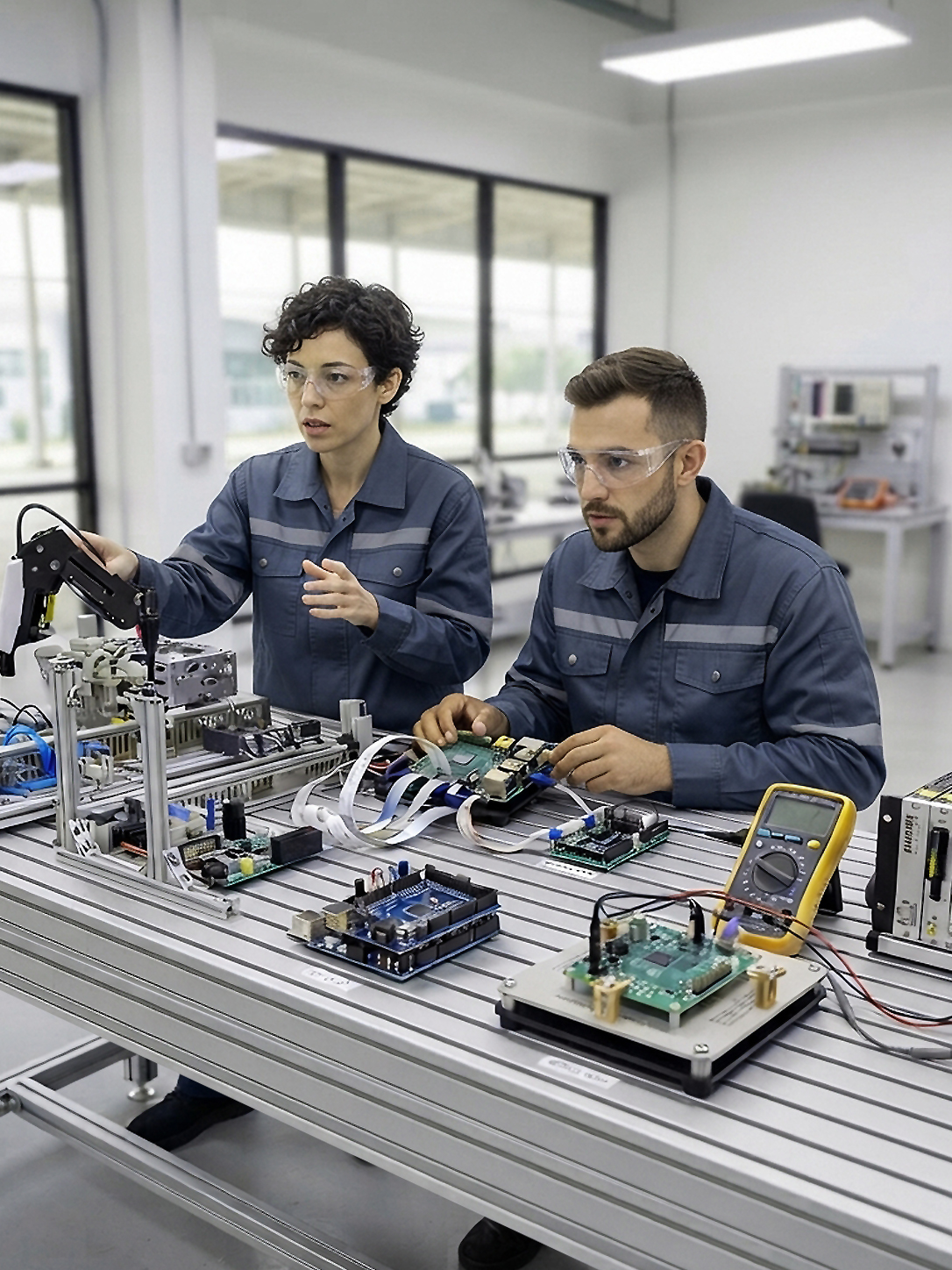
The Challenges Behind Safety-Critical Development
Safety-critical development becomes increasingly complex as products combine sophisticated electronics, embedded software, connected interfaces, and increasingly demanding operating environments. A safety function cannot be treated independently because its effectiveness depends on how the complete system is designed, integrated, verified, and maintained.

Managing System Complexity
Modern safety-critical products bring together hardware, firmware, software, sensors, communication interfaces, control functions, and safety mechanisms. Ensuring that these elements behave correctly together under both normal and abnormal conditions requires system level engineering from the beginning.

Controlling Safety and Regulatory Requirements
Different industries and applications are governed by specific safety standards and regulatory expectations. Teams must translate those requirements into practical engineering objectives while maintaining alignment throughout design, implementation, verification, and certification activities.

Maintaining Complete Traceability
Safety requirements need to remain connected to system architecture, design decisions, implementation, verification activities, and test evidence. Maintaining this traceability across a complex development lifecycle is essential for demonstrating that safety objectives have been addressed.

Identifying Risks Early
Design decisions made early can have significant implications for system safety, development cost, and certification schedules. Hazard analysis, risk assessment, and fault analysis help engineering teams identify potential issues early enough to influence the architecture and design.

Managing Verification and Validation
Safety-critical systems require extensive evidence that their intended behavior and safety mechanisms work as expected. Unit, integration, model based, hardware in the loop, static, dynamic, and other verification techniques must be coordinated without compromising the rigor of the development process.

Accessing Specialized Engineering Expertise
Safety-critical development requires knowledge that spans system architecture, embedded engineering, safety analysis, testing, quality processes, and applicable standards. Organizations may need additional expertise or engineering capacity without having to build every capability internally.
These challenges are closely connected. A change in system architecture can affect hardware and software requirements, verification activities, traceability, and ultimately the evidence needed for compliance. Addressing them effectively therefore requires a coordinated engineering approach rather than isolated technical functions. That is where an integrated safety-critical development process becomes important.
Integrated Safety-Critical Engineering
Connecting safety objectives with architecture, implementation, verification, and compliance
Safety cannot be added to a product after the main engineering decisions have already been made. It needs to influence the way the system is structured, how risks are addressed, how hardware and software interact, and how the resulting design is verified. Powersoft19 brings these activities together so that safety requirements remain connected throughout the development process.
Our multidisciplinary teams can contribute to individual engineering activities or support a broader safety-critical development program, depending on the product, development stage, and capabilities available within the client organization.
1. Safety Architecture and Analysis
We translate safety objectives and application requirements into system level safety concepts and architectures. This can include hazard and risk analysis, HARA where applicable, FMEA, safety goals, partitioning, redundancy, independence, fault containment, and the definition of safety mechanisms appropriate to the system.
Where safety architecture affects broader product architecture, our teams can work alongside Systems Engineering and New Product Development teams to establish requirements and design decisions early in the lifecycle.
2. Embedded System Development
Our embedded engineering capabilities cover the development and integration of hardware, firmware, and software required to implement safety related functions. Depending on the application, this can include hardware abstraction, bootloaders, safe startup and shutdown routines, monitoring functions, diagnostics, communication interfaces, and fault handling.
The work can extend across Safety-Critical Firmware, Safety-Critical Hardware, and broader Embedded Systems Design capabilities to maintain consistency between the system architecture and its implementation.
3. Verification and Validation
Verification and validation are integrated throughout development rather than treated as final stage activities. Our teams can apply unit, integration, model based, hardware in the loop, static, dynamic, and formal verification techniques according to the requirements and safety objectives of the application.
This approach helps identify defects, design weaknesses, and integration issues earlier while building the evidence needed to demonstrate that requirements have been implemented and verified.
For broader product quality requirements, these activities can also connect with our Quality Assurance and testing capabilities.
4. Traceability and Safety Documentation
Safety-critical development depends on being able to demonstrate how safety requirements have been addressed throughout the development lifecycle. We establish traceability between requirements, architecture, implementation, verification activities, and test results while supporting the documentation needed for reviews, audits, and certification activities.
This can include safety plans, requirements documentation, verification strategies, safety cases, safety manuals, and supporting technical evidence.
5. Fault Management and Resilience
Safety mechanisms need to account for how a system behaves when components, signals, software functions, or communication paths do not operate as expected. Powersoft19 can support fault detection, diagnostic functions, fault containment, redundancy, graceful degradation, and fault handling strategies based on the requirements of the application.
Fault analysis and fault injection can also be used to evaluate system behavior under defined failure conditions and identify areas where additional protection or design changes may be required.
6. Certification and Lifecycle Support
Safety-critical engineering continues after the first design is complete. Powersoft19 supports activities associated with certification preparation, compliance documentation, audit readiness, change impact analysis, recertification, maintenance, and lifecycle management.
Our teams can work with the applicable certification and compliance bodies to prepare the technical evidence required for the relevant standards and regulatory framework, while supporting continued engineering as the product evolves.
A Connected Safety-Critical Development Lifecycle
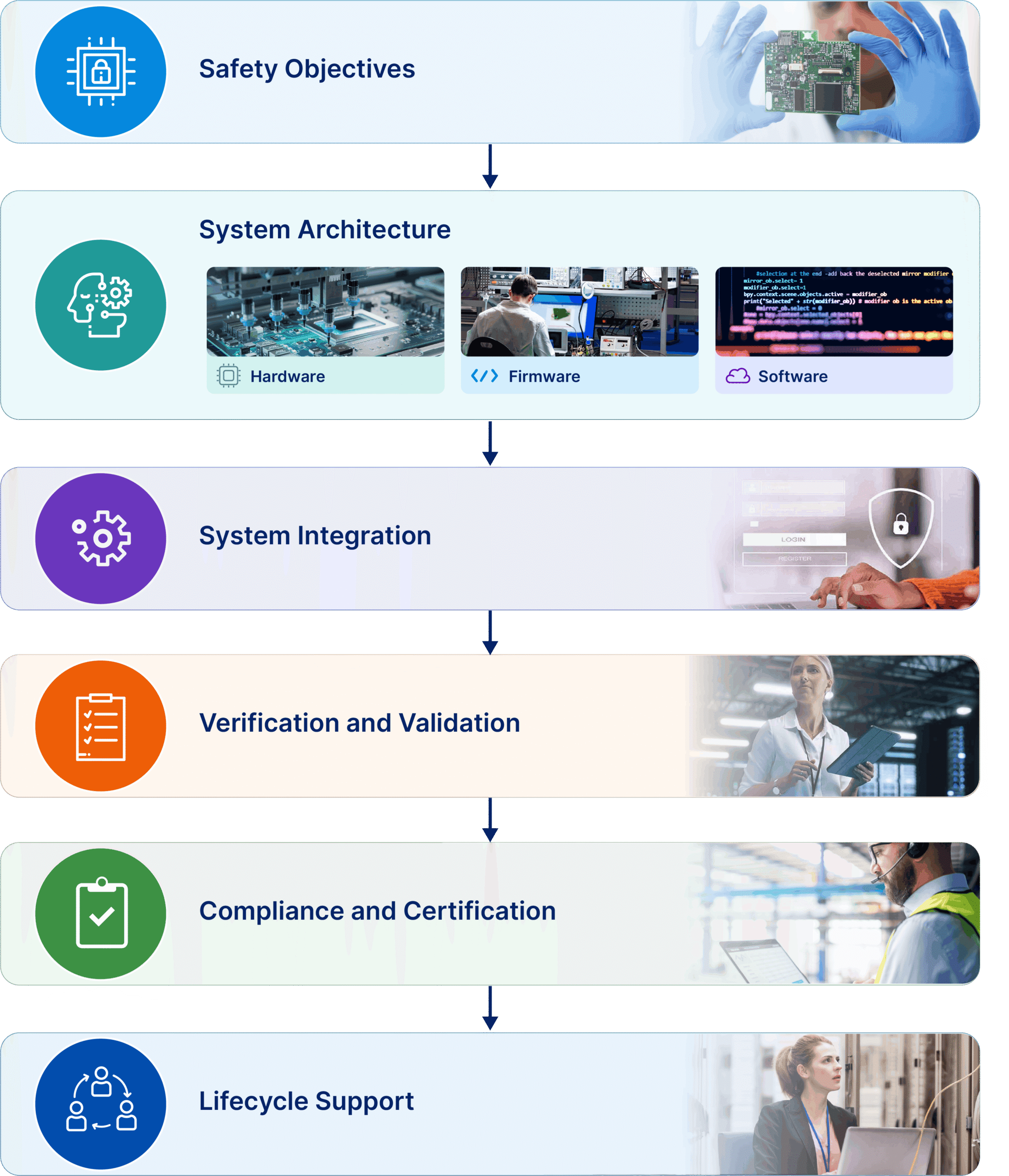
Safety-critical development is most effective when safety considerations remain connected from the earliest definition of the system through verification, certification, and ongoing maintenance. Powersoft19 can support this lifecycle as an integrated engineering partner, helping teams address dependencies between system requirements, architecture, implementation, testing, and compliance before they become costly late stage issues.
01
Safety Goals and Requirements
Define system objectives, safety requirements, functional requirements, operating conditions, and applicable standards that establish the foundation for subsequent engineering activities.
02
Hazard and Risk Analysis
Identify potential hazards and failure conditions, assess associated risks, and establish appropriate safety goals, mechanisms, and mitigation strategies.
03
System Architecture
Translate requirements into an architecture with appropriate partitioning, independence, redundancy, fault containment, interfaces, and safety mechanisms.
04
Hardware and Software Development
Implement the system across its hardware, firmware, and software layers while maintaining alignment with defined safety requirements and architectural constraints.
05
System Integration
Bring individual components and engineering disciplines together to evaluate interfaces, dependencies, communication paths, and system behavior under defined operating conditions.
06
Verification and Validation
Generate evidence that requirements have been correctly implemented and that the integrated system performs as intended, including testing, analysis, simulation, and other applicable verification techniques.
07
Compliance and Certification
Prepare the technical documentation, verification evidence, safety cases, and supporting materials required for applicable standards, regulatory reviews, and certification activities.
08
Lifecycle Support
Implement the system across its hardware, firmware, and software layers while maintaining alignment with defined safety requirements and architectural constraints.
The lifecycle is not necessarily linear. Findings from verification can lead to changes in architecture, while changes to an existing product can require renewed risk analysis, testing, and certification activities. By maintaining connections between these stages, engineering teams can manage change without losing visibility into its safety implications.
For organizations developing a new product, modernizing an existing system, or extending internal engineering capacity, Powersoft19 can provide support at a defined stage or across the broader lifecycle.
Discuss your project with our engineering team to identify where additional safety-critical expertise can contribute.
Tools and Development Environments
Safety-critical development requires engineering tools that support the specific technology, development process, verification strategy, and applicable safety requirements of each project. Powersoft19 works across established engineering environments and can adapt to client preferred tools and qualified safety toolchains where required.
| Category | Tools and Technologies |
|---|---|
| Modeling and Simulation | MATLAB/Simulink, SCADE, IBM Rhapsody, ANSYS Twin Builder |
| Embedded Development | C/C++, MISRA C, Ada, Rust safe subsets, Embedded Linux, FreeRTOS |
| Static and Dynamic Analysis | Polyspace, LDRA, Coverity, Klocwork, VectorCAST |
| Testing and Validation | TESSY, Parasoft, CANoe, Vector VT System, NI VeriStand, Jenkins CI, QEMU |
| Safety Analysis and Compliance | medini analyze, Safety Architect, TÜV-certified toolchains |
| Requirements Managements | Polarion ALM, Jama Connect, ReqIF, Jira |
| Version Control and CI/CD | Git, SVN, Bitbucket, Azure DevOps, Jenkins, GitLab CI |
Tool selection depends on the product architecture, development methodology, safety requirements, and existing engineering environment. Our teams can work within established client toolchains or help integrate appropriate development, analysis, testing, and requirements management tools into the project workflow.
Where required, safety related tool qualification and supporting documentation can also be incorporated into the development and compliance process.
The technology stack supports the engineering process, but tools alone do not establish compliance. The development activities, evidence, documentation, and verification practices must also align with the requirements applicable to the product and its industry.
Safety Standards, Compliance, and Certification
Safety-critical products are developed within regulatory and industry frameworks that define expectations for system development, risk management, verification, documentation, and certification. The applicable requirements depend on the industry, product, architecture, and intended operating environment. Powersoft19 incorporates these considerations into the engineering process from the early stages of development rather than treating compliance as a final project activity.
Standards and Frameworks
Compliance requirements vary by industry, application, and system being developed. Our teams help integrate relevant safety activities, documentation, and verification evidence into the wider development process to support certification and compliance requirements.

ISO 26262
Road vehicle functional safety

DO 178C
Airborne software

ARP4754A
Guidelines for development of civil aircraft and systems

ARP4761
Safety assessment processes for civil airborne systems and equipment
IEC 62304
Medical device software lifecycle processes

EN 50128
Railway control and protection software
IEC 61508
Functional safety of electrical, electronic, and programmable electronic systems
Our engineering teams can work with the safety requirements and development processes applicable to the target industry, including standards beyond those listed above. Where certification is required, we support the preparation of technical evidence and documentation and coordinate with the relevant third-party certification and assessment organizations.
Compliance and Certification Support

Safety Planning and Documentation
Safety plans, requirements, verification strategies, safety cases, safety manuals, traceability records, and supporting technical documentation can be incorporated into the development process according to project and certification requirements.

Verification and Certification Evidence
Our teams can support the generation and organization of verification evidence, test results, analysis outputs, and other technical artifacts required for compliance reviews and certification activities.

Tool Qualification
Where applicable, we support tool qualification activities and documentation for development, analysis, and verification environments used within safety-critical projects.
Audit and Assessment Support
Powersoft19 can work alongside certification and assessment organizations to prepare technical documentation, address review requirements, and support audit and assessment activities throughout the project.
Compliance is strongest when the required evidence is created as part of engineering rather than reconstructed at the end of development. Maintaining traceability between requirements, design decisions, implementation, verification, and safety documentation helps teams respond to reviews while reducing the risk of gaps appearing late in the certification process. This same discipline becomes particularly important when an existing product is modified, because even seemingly localized changes can affect system behavior, safety requirements, verification evidence, or certification status.
If you are preparing a product for certification or assessing the impact of changes to an existing system, our team can help define the engineering and compliance activities required. Contact us to explore your requirements.
Engineering Safety Into the Product
Safety-critical development rarely fits within a single engineering discipline. Architecture decisions can affect hardware, firmware, software, verification, compliance, and ultimately the product lifecycle. Powersoft19 brings these capabilities together so organizations can address system level safety requirements while drawing on specialized engineering expertise where it is needed.
Multidisciplinary Engineering
Bring together systems, hardware, firmware, software, testing, and quality engineering capabilities within a coordinated development approach.
Safety Across the Lifecycle
Address safety requirements from architecture and implementation through verification, certification support, modernization, and long-term product maintenance.
Flexible Engineering Engagement
Engage Powersoft19 for a defined engineering function, additional development capacity, specialized safety expertise, or broader product development support.

Established Engineering Ecosystem
Work within established development environments, tools, processes, and certification frameworks while integrating the engineering capabilities required for the specific product.
This approach is particularly valuable when safety requirements intersect with broader product development challenges. Powersoft19 can work alongside an existing engineering organization or contribute as an extended development team, connecting specialized capabilities without requiring clients to establish every discipline internally.
If your team is facing a complex safety engineering challenge or needs additional development capacity, explore your options with Powersoft19.
Safety-Critical Engineering Across Industries
Safety requirements vary significantly between industries, but the underlying need for controlled risk, dependable system behavior, rigorous verification, and traceable engineering remains consistent. Powersoft19 applies its multidisciplinary engineering capabilities across applications where system reliability and safety are fundamental to product performance.

Automotive
Safety-critical ECUs, vehicle electronics, embedded control systems, functional safety, and connected vehicle applications.

Aerospace and Aviation
Embedded systems and software where system integrity, verification, traceability, and certification requirements are central to development.

Rail and Transportation
Control, signaling, monitoring, embedded computing, and software systems operating within demanding transportation environments.

Medical
Embedded and software systems requiring structured development, verification, documentation, and compliance with applicable medical device requirements.

Industrial and Energy
Control systems, industrial equipment, automation, monitoring, and embedded products where dependable operation and fault management are essential.
The engineering approach can be adapted to the product architecture, operating environment, risk profile, and regulatory framework of each application. Where safety-critical functionality intersects with IoT, Automation, connected products, or other advanced technologies, the broader Powersoft19 engineering ecosystem can provide additional capabilities around the system.
Build With Safety in Mind From the Start
Whether you are developing a new safety-critical product, modernizing an existing system, preparing for certification, or extending your engineering capacity, Powersoft19 can support the technical and safety requirements of your development program.
From safety architecture and embedded development to verification, compliance, and lifecycle support, our teams can contribute at the level your project requires. Talk to our experts.