
Engineering Hardware for Complex Products
Hardware engineering brings together the electrical, electronic, mechanical, and physical elements that make a product work reliably in the real world. A successful design must meet its functional requirements while also accounting for performance, thermal behavior, physical constraints, reliability, manufacturability, sourcing, and the conditions in which the product will operate.
As products become more connected and increasingly dependent on embedded intelligence, hardware decisions also affect firmware, software, communications, mechanical packaging, testing, and system behavior. PCB layout can influence signal integrity and thermal performance. Component selection can affect power consumption, sourcing, and product lifecycle. Changes to one part of the design can introduce requirements elsewhere.
Powersoft19 approaches hardware engineering as part of the wider product development process. Our engineers work across requirements, electronic design, PCB implementation, analysis, verification, and production transition, with the process adapted to the technical requirements and risks of each project. Where hardware forms part of a larger connected or embedded product, our work can also integrate with embedded systems design, systems engineering, firmware, software, and other engineering disciplines.
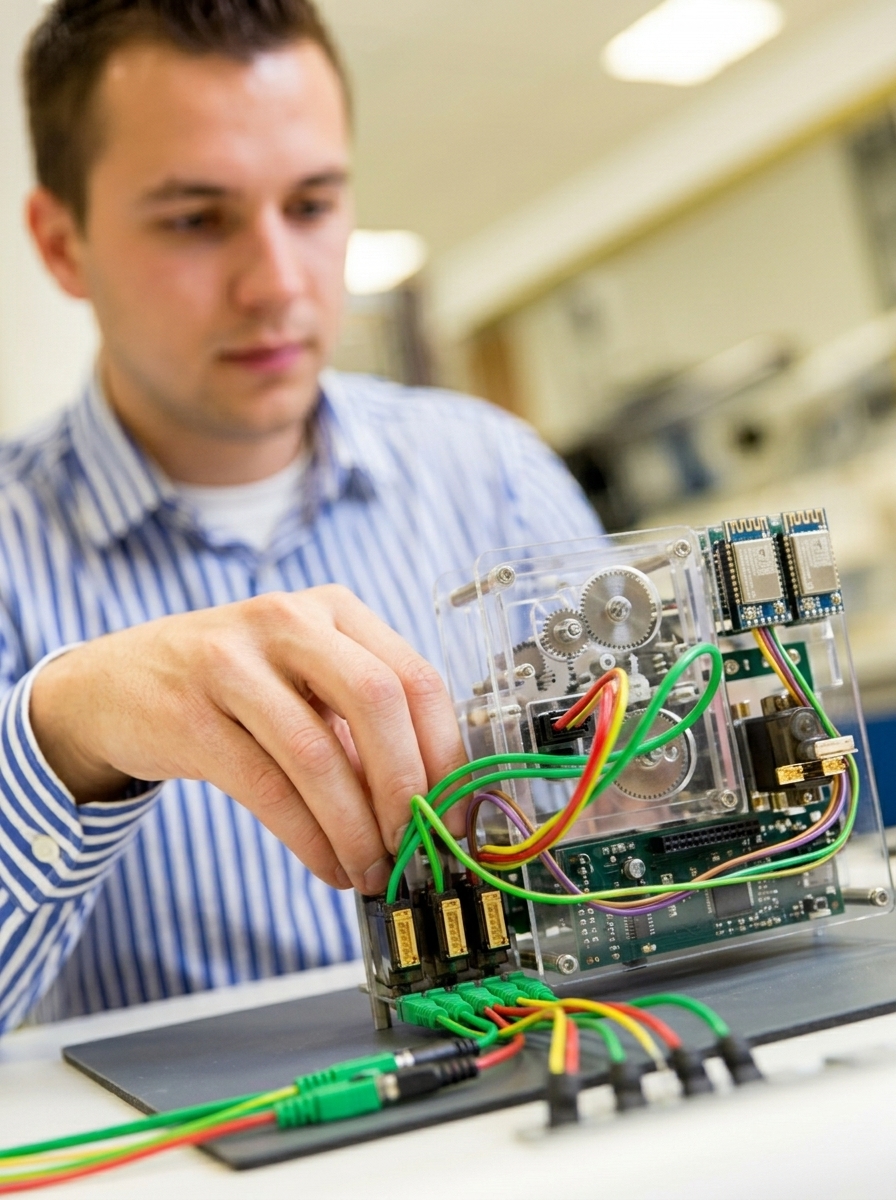
Where Hardware Engineering Gets Complex
Hardware development rarely fails because a single component cannot perform its intended function. The greater challenge is ensuring that the complete design continues to meet its requirements as performance, physical, environmental, and production considerations interact.

Signal and Power Integrity
Higher processing speeds and increasingly demanding interfaces make PCB design more sensitive to routing, impedance, propagation delay, grounding, power distribution, and component characteristics. Signal and power integrity analysis can identify problems before they result in additional prototype revisions or field issues.

Thermal Performance
Increasing processing capability and power density can create thermal constraints across the product. Components, PCB layout, enclosures, heatsinks, and airflow all influence how heat moves through a system. Thermal considerations therefore need to be addressed alongside electrical and mechanical design rather than after the hardware has already been developed.

Reliability and Environmental Conditions
Products may need to withstand temperature variation, vibration, mechanical shock, ingress conditions, electrical stresses, and other operating environments. Reliability engineering and appropriate verification help identify weaknesses that may not appear during normal functional testing.

Design and Production Risk
A prototype that works electrically is not necessarily ready for production. Fabrication tolerances, assembly processes, component availability, test requirements, design for manufacturing, and supply chain considerations can all affect the transition from engineering samples to production hardware.

Compliance and Certification
Products operating in regulated or safety sensitive environments may need to satisfy electrical, electromagnetic, environmental, wireless, or industry specific requirements. These considerations can influence architecture, component selection, PCB layout, testing, documentation, and verification from the beginning of development.
Hardware Engineering Capabilities
Powersoft19 provides hardware engineering across the development lifecycle, from initial electronic architecture and circuit design through analysis, verification, manufacturing support, and lifecycle management. The scope can be structured around a complete development program or specific engineering activities where additional expertise or capacity is required.
| Category | Tools and Technologies |
|---|---|
| Electronic Design | Board design, circuit design, analog, digital, mixed signal, RF, power electronics |
| PCB Engineering | PCB design and layout, high speed and high-density implementation |
| Advanced Hardware | VLSI and ASIC design |
| Simulation and Analysis | Circuit simulation, signal integrity, power integrity, thermal analysis |
| Verification and Reliability | Engineering verification and validation, reliability engineering, environmental evaluation |
| Manufacturing Support | DFM and DFX, PCB fabrication, PCB assembly, component sourcing, production transition |
| Lifecycle Engineering | Component lifecycle management, engineering data, parts libraries, structured change management |
| Program Support | Hardware program management, technical coordination, schedules, risks, and cross functional teams |
The engineering scope can also extend into connected and intelligent products where hardware must work closely with firmware, software, communications, and cloud-based services. This is particularly relevant to IoT and automation projects where the hardware is one part of a larger operational system.
From Circuit Design to Production
A hardware design has to survive more than a schematic review. Our engineering activities connect the major stages of development so that decisions made early in the process can be evaluated against their impact on later stages.
Requirements and Concept Development
Development begins by establishing what the hardware needs to achieve. Functional requirements, operating conditions, electrical characteristics, physical constraints, interfaces, environmental conditions, and applicable quality or certification requirements provide the basis for the hardware concept.
The concept stage is also where important architectural decisions can be assessed before they become expensive to change. Depending on the product, this may include power architecture, processing requirements, communications interfaces, component strategy, board configuration, and the relationship between electrical and mechanical elements.
Detailed Design and Implementation
The approved concept is developed into detailed circuitry, PCB implementation, component selection, and physical hardware. Electrical and mechanical considerations are addressed together where they affect packaging, thermal behavior, accessibility, manufacturability, or product performance.
For products involving embedded control, hardware development can be coordinated with safety-critical firmware or broader firmware and software engineering activities so that interfaces and system requirements remain aligned.
Analysis and Engineering Review
Simulation and engineering analysis provide an opportunity to evaluate the design before physical hardware reaches later development stages. Depending on the product, analysis may cover circuit behavior, signal integrity, power integrity, thermal conditions, and other design specific requirements.
Engineering reviews then bring these findings together with requirements, component choices, PCB implementation, mechanical constraints, and manufacturing considerations.
Verification and Acceptance
Developed hardware is evaluated against defined requirements through structured verification and testing. Activities may include electrical and functional testing, environmental testing, reliability evaluation, and other acceptance criteria relevant to the product.
Where hardware forms part of a safety critical product, verification can be coordinated with broader QA and testing activities and the applicable development and assurance processes.
Production Transition
Once the design has been verified, it can be prepared for production through fabrication, assembly, sourcing, manufacturing documentation, test requirements, and production processes. Design for manufacturing and related DFX considerations help ensure that the transition from engineering samples to production hardware does not introduce avoidable problems.
Configuration management and structured change processes help maintain control as the product moves through development and into production.
An Integrated Hardware Development Process
Powersoft19 follows a structured, V-model based approach that connects requirements, design, implementation, verification, and acceptance. The process can be scaled according to the complexity, risk, and development stage of the project.

The value of the approach is not simply following a fixed sequence. It is maintaining a clear relationship between what the product is required to do and how the design is ultimately verified. This helps engineering teams identify issues earlier and maintain traceability as the hardware develops.
For products that combine electronics with firmware, software, communications, and mechanical systems, the hardware process can also operate within a broader systems engineering and new product development framework.
Engineering Beyond the First Prototype
The first working prototype is an important milestone, but it is not the final measure of a successful hardware design. Production readiness requires the design to remain practical when fabrication tolerances, component availability, assembly processes, testing, environmental conditions, and lifecycle considerations are introduced.
This is where electrical and mechanical engineering need to work together. PCB layout, component placement, thermal management, enclosure constraints, connectors, accessibility, and manufacturing processes can influence one another throughout development.
Powersoft19 brings electrical and mechanical engineering together so these relationships can be considered during design rather than discovered late in the development cycle. If your product requires broader product development support, hardware engineering can also connect with product design and new product development activities.
Why Powersoft19
Powersoft19 follows a structured, V-model based approach that connects requirements, design, implementation, verification, and acceptance. The process can be scaled according to the complexity, risk, and development stage of the project.

Electrical and Mechanical Engineering Together
Hardware design does not end with the circuit. PCB implementation, electronic packaging, thermal management, mechanical constraints, and manufacturing requirements can all influence the final product. Bringing these disciplines together helps address those relationships within the development process.

Engineering Depth Across the Lifecycle
Powersoft19 supports hardware development from requirements and concept development through design, analysis, verification, and production transition. This allows engineering decisions to be considered in the context of the complete product rather than an isolated development stage.

Structured and Scalable Development
Our V-model based process connects requirements with implementation and verification while allowing the depth of engineering activity to scale with the project’s technical and financial risks. Projects can therefore receive the level of engineering rigor appropriate to their requirements.

Experienced Engineering Teams
With an average team experience of 23 years, Powersoft19 brings established engineering knowledge to hardware development. A reported team retention rate of 95.5% over the previous 10 years also supports continuity of engineering knowledge across long running projects.

Flexible Engineering Engagement
Some projects require complete hardware development. Others need additional PCB expertise, simulation, verification, production support, or engineering capacity alongside an existing team. Powersoft19 can support defined activities or broader development scopes according to the requirements of the project.
If you are developing new hardware, improving an existing design, or preparing a prototype for production, talk to our engineers about the engineering scope your project requires.
Hardware Engineering for Connected and Demanding Products
Modern hardware increasingly operates as part of a larger technical ecosystem. Connected devices may depend on embedded firmware, mobile or enterprise software, cloud platforms, communications infrastructure, and automation workflows. Products operating in safety sensitive environments may also require coordinated hardware, firmware, software, verification, and cybersecurity considerations.
Powersoft19 can contribute across these connected engineering requirements while maintaining hardware as a clearly defined engineering discipline. This allows hardware development to integrate naturally with related capabilities such as IoT, automation, cybersecurity, software engineering, and AI where the product architecture requires them.
The same engineering approach can be applied across industries including industrial systems, energy, electronics, automotive, rail, healthcare, and other applications where hardware performance, reliability, and lifecycle requirements matter.
Whether you need a complete hardware engineering team or support for a specific stage of development, discuss your requirements with our engineers and determine the appropriate scope for your product.